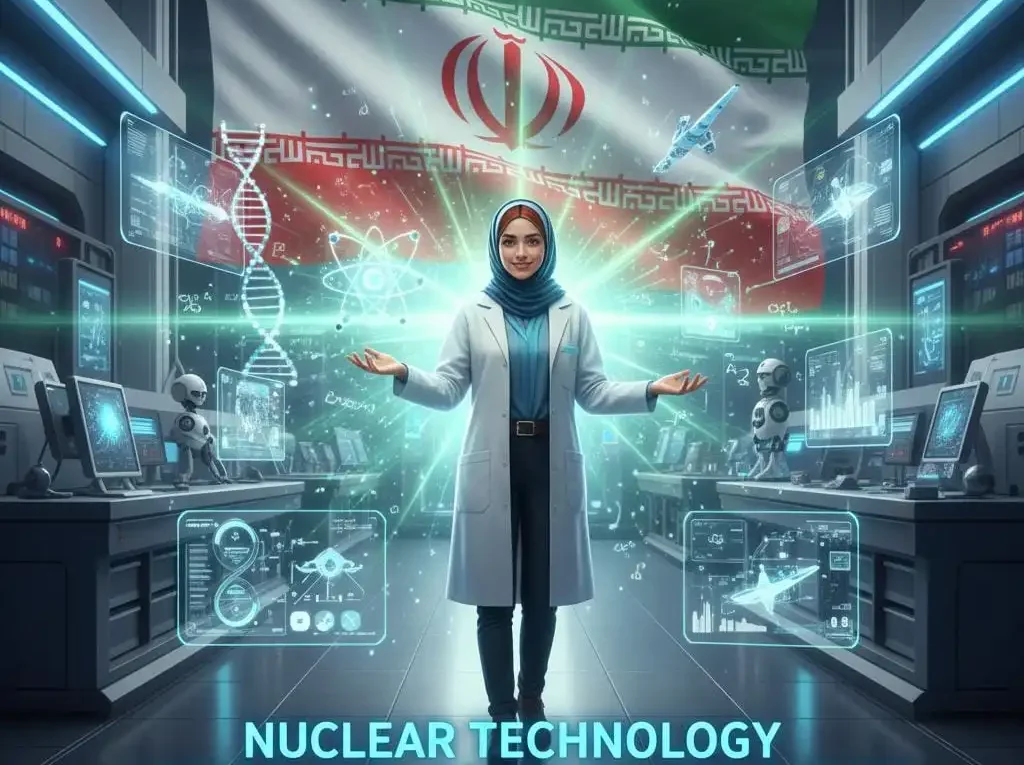
Over the past two decades, Iran has made headlines for its nuclear activities — but beyond political debates and global negotiations, one fact often gets ignored: nuclear technology accelerated scientific, medical, and industrial development inside the country at a surprising pace.
While the world mainly focuses on security concerns, within Iran, the nuclear program became a driver of research, innovation, and technological independence. This blog explains exactly how nuclear technology accelerated Iran’s progress, why it matters, and what the future may look like.
How Nuclear Technology Accelerated Iran’s Scientific Growth
When discussing the impact of Iran’s nuclear program, most people think only about uranium enrichment or political tensions. But inside Iran, scientists and universities point toward a different story — one where nuclear technology accelerated advancements in health, agriculture, energy, industry, and education.
Iran invested heavily in scientific research, training thousands of engineers and physicists and building research centers that today compete with global institutions. This development journey shows how nuclear technology accelerated national capacity-building in a time of sanctions and isolation.
1. Medical Advancements and Cancer Treatment
One of the least-known impacts is in medicine. Nuclear-based technologies are used worldwide for cancer detection, imaging, and radiation therapy. Iran followed the same path.
The country developed its own radiopharmaceuticals — medical isotopes used for diagnosing cancers and heart diseases. This was revolutionary, especially since sanctions restricted imports. As a result:
Hospitals gained access to affordable treatment
Cancer diagnostics improved in accuracy
Domestic production reduced healthcare dependency
Here too, nuclear technology accelerated progress by enabling Iran to meet its medical needs through self-reliance.
2. Enhancing Agriculture with Nuclear Science
Agriculture is another field where nuclear technology accelerated innovation. Iranian scientists used nuclear techniques to improve crop resilience, boost production, and reduce pests without harmful chemicals.
This included:
Developing drought-resistant crop varieties
Producing better seeds using radiation mutation breeding
Sterile insect techniques to stop agricultural pests
These advancements helped farmers across Iran produce more food despite climate changes and water shortages.
3. Power Generation and Energy Research
Although Iran still relies mainly on oil and gas, nuclear research created an alternative path. The Bushehr Nuclear Power Plant began producing electricity, but beyond power generation, the research infrastructure built around it produced thousands of nuclear engineers.
In the context of sanctions, nuclear technology accelerated Iran’s ability to explore sustainable energy solutions, diversify its research, and train a highly specialized workforce.
Also Read: The Dangerous Stalemate Over Iran’s Nuclear Program
4. Industrial and Engineering Innovations
Another major benefit came from industrial radiation technology. Iran uses nuclear techniques for:
Testing pipeline and construction quality
Improving material strength
Monitoring industrial processes
Enhancing oil extraction efficiency
Because Iran has one of the world’s largest oil reserves, these innovations significantly supported the economy. Once again, nuclear technology accelerated industrial modernization beyond what many outsiders expected.
5. Scientific Education and Research Institutions
Iran’s universities and research centers saw massive growth in physics, chemistry, engineering, and nuclear science fields. As a result:
Enrollment in STEM fields increased
Research papers from Iran rose globally
Young scientists gained hands-on training
National scientific output strengthened
Iran now ranks among the top countries in West Asia for scientific publications — a clear sign of how nuclear technology accelerated nationwide academic progress.
6. Building Technological Independence Under Pressure
Decades of sanctions isolated Iran technologically, limiting access to imported machinery, medical tools, and scientific equipment. Instead of collapsing, Iran turned inward and built its own capabilities.
This forced independence approach meant that:
New technologies were developed domestically
Engineers learned to redesign restricted equipment
Local industries produced high-tech components
Many Iranian scientists openly say that nuclear technology accelerated innovation because restrictions forced them to create homegrown solutions.
7. International Collaboration and Scientific Diplomacy
Despite political tensions, Iran maintains ties with international scientific bodies such as the IAEA. Through these channels, researchers exchange knowledge, follow safety standards, and receive training.
These relationships allowed Iran to:
Improve nuclear safety protocols
Enhance research transparency
Participate in global scientific discussions
This aspect shows how nuclear technology accelerated Iran’s entry into certain scientific communities even during geopolitical pressure.
The Risks: Scientific Progress with Political Consequences
While the progress is undeniable, it comes with risks:
Global powers fear Iran may push beyond peaceful nuclear use
Sanctions continue to pressure the economy
Diplomatic tensions remain
Regional countries feel threatened
This means scientific growth and political mistrust run side-by-side.
Future Outlook: What Comes Next for Iran?
In the coming years, Iran is expected to expand peaceful nuclear programs, especially in:
Cancer treatment centers
Agricultural biotechnology
Research reactors
Nuclear-powered desalination plants
These developments can significantly benefit the population if diplomatic stability is maintained.
As long as Iran complies with international regulations, nuclear technology accelerated progress can remain a force for development rather than conflict.
Conclusion
Iran’s nuclear journey is often seen only through a political lens, but inside the country, it transformed into a powerhouse of scientific and technological innovation. Across medicine, agriculture, industry, energy, and education, nuclear technology accelerated progress in a way few expected.
Despite challenges and global concerns, the scientific achievements rooted in nuclear research have shaped Iran’s modern identity and strengthened its quest for technological independence. If handled responsibly, these advancements can continue to uplift the nation and contribute positively to global science.